Bumper to bumper, the entire length of a tunnel under the Huangpu River, in the back of a van. Brand new tunnel overhead, millions of tons of water on top of that, and my brain, helpfully: did they really know what they were doing when they built this?Full fight or flight, and I am a flight guy, so every part of me wanted to open the door and run. You can't. So you sit there and say, all right, this is it, I'm doing it, and you console yourself with the one fact you can hold onto: a tunnel has two openings, and you only need the other one.
I did some version of that every working day for two weeks, and three things happened in that seat. Getting into it was the hardest thing I've done in years. Looking out the window was, for a transportation nerd, paradise. And what I saw out the window left me with a question about China and America that I came home without an answer to. The fear, the window, and the question.
- what
- first work trip to a factory, and my first time in China
- when
- August 21 to September 6, 2026 · sixteen days
- where
- Shanghai, Pudong side · the factory out past the city limits · a day in Hangzhou · my wife did a 36-hour side trip to Beijing while I worked
- who
- my wife came with me and stayed the whole time · our daughter Eve stayed home with my parents
- the other post
- the professional half, glue machines and all, is here
## 1. Getting in the van
First, the bubble, because it shapes everything after it. I saw a very specific slice of China: United Polaris on the way over, a Park Hyatt on the Pudong side, team dinners at places with tasting menus, a whisky lounge in the French Concession. That was Apple's money, not mine, and I'm not going to pretend I was backpacking. I didn't see the politics or the censorship, I have no idea what life is like for the people who drove me around, and I didn't have a single real conversation with a local outside of work. Everything below is a view from a very nice window.
I've never had it formally named, but I have something like agoraphobia, and it comes bundled with a fear of flying. The name is misleading. It isn't a fear of open spaces; it's a fear of being somewhere you can't get out of, or get help in, if the panic starts. The textbook list is tunnels, bridges, elevators, airplanes, and traffic you can't leave, which is also, as you'll see, a fairly complete list of my commute in Shanghai. Before this trip a bad day looked like this: there is exactly one bridge in the Bay Area I will drive, because I know it, and I couldn't do the BART tunnel under the bay at all. Going under water was too much. I'm an electrical engineer. I know what a factor of safety is. I know a bored tunnel under a river is among the most over-engineered objects a person will ever sit inside. None of that has ever helped, which told me early that the fear isn't about the tunnel. The tunnel is just where it shows up.
So there was a lot of bargaining with myself in the weeks before. I had real, serious thoughts about saying no: give up on the dream of being a great Apple engineer, ride out the year until the golden handcuffs come off, tell my manager I can't travel and ask for reasonable accommodations (which is a thing you can do in California), and never get on the plane. It would have worked. Nobody would have blamed me. What stopped me was running the tape forward and finding that every version of my life where I said no had me still thinking about it at sixty.
How I actually did it, as honestly as I can put it: lorazepam for the flight, and my wife in the seat next to me. That's the how. The why is simpler. There are two mouths to feed at home, and they were counting on me to go to work, do the job, and bring the dough home. The plan for Eve, our daughter, was my parents, which also happened to be the first real break my wife has had from parenting since Eve arrived, so she came with me. I got very lucky in the wife department, and I want that on the record. And I noticed something about the why: obligation turned out to be a stronger drug than anything in the bottle. On the days I was afraid, I didn't win an argument with the fear. I just had somewhere to be.
Then the trip itself turned out to be a daily exposure exercise I hadn't signed up for. We stayed on the Pudong side and the factory was on the other side of the river and a long way out, so every single morning and every single evening it was flyovers, expressways, and a tunnel under the Huangpu, often at a crawl. The hotel didn't help: my room was on the 84th floor, check-in was on the 87th, and breakfast was on the 91st, which means a minute-long express elevator to the top of one of the tallest buildings in the city, twice a day, every day. Hilarious, in hindsight.
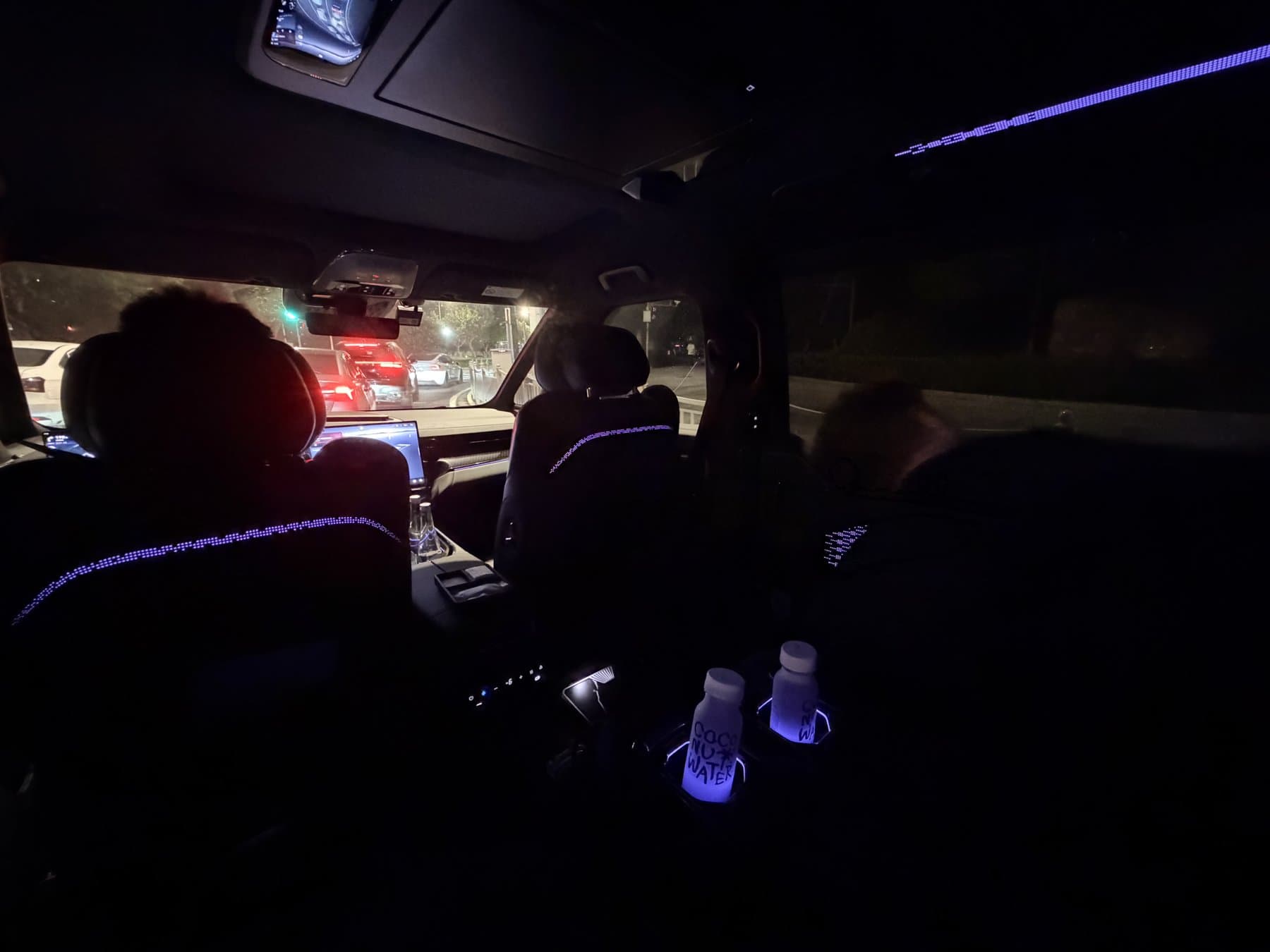
The method I landed on is not sophisticated: notice that you're afraid, do the thing anyway, and notice afterward that the fear didn't last. Deep breaths. Here's the part I didn't expect. Exposure therapy is supposed to make it better, and it got worse. The first few days I could do anything; I'd just landed and the adrenaline covered it. Then each day the dread got a little bigger, until by the end of the trip the tunnel was harder than it had been at the start. My best guess is that the novelty wore off before the habit set in, and that by the second week the tunnel wasn't the tunnel anymore, it was a rehearsal for the flight home. I don't know. What I do know is that I got in the van every day anyway, and that turned out to be the actual lesson. The fear didn't shrink. It just stopped being the thing that decided what I did. I used to think growth meant the fear going away. It means the fear losing the vote.
Why it was worth it: I listened to The Amp Hour all the way through college, almost ten years ago now, and a huge fraction of those episodes were engineers flying to China to deal with high-volume manufacturing, DFM problems, process problems, the whole grind. The one that stuck was episode 437 with Chrissy Meyer, who said something about glue machines being the bane of her existence, and who, I found out years later, had been an engineering program manager on the first few generations of Apple Watch. Not my team, exactly, but close enough to my corner of the company that it absolutely blew my mind. This trip was me finally getting to be one of those engineers, and walking onto a factory floor on the other side of the world with a problem to solve felt like a level-up I'd been waiting a decade for. The specifics belong in the other post. The feeling belongs here.
## 2. Out the window
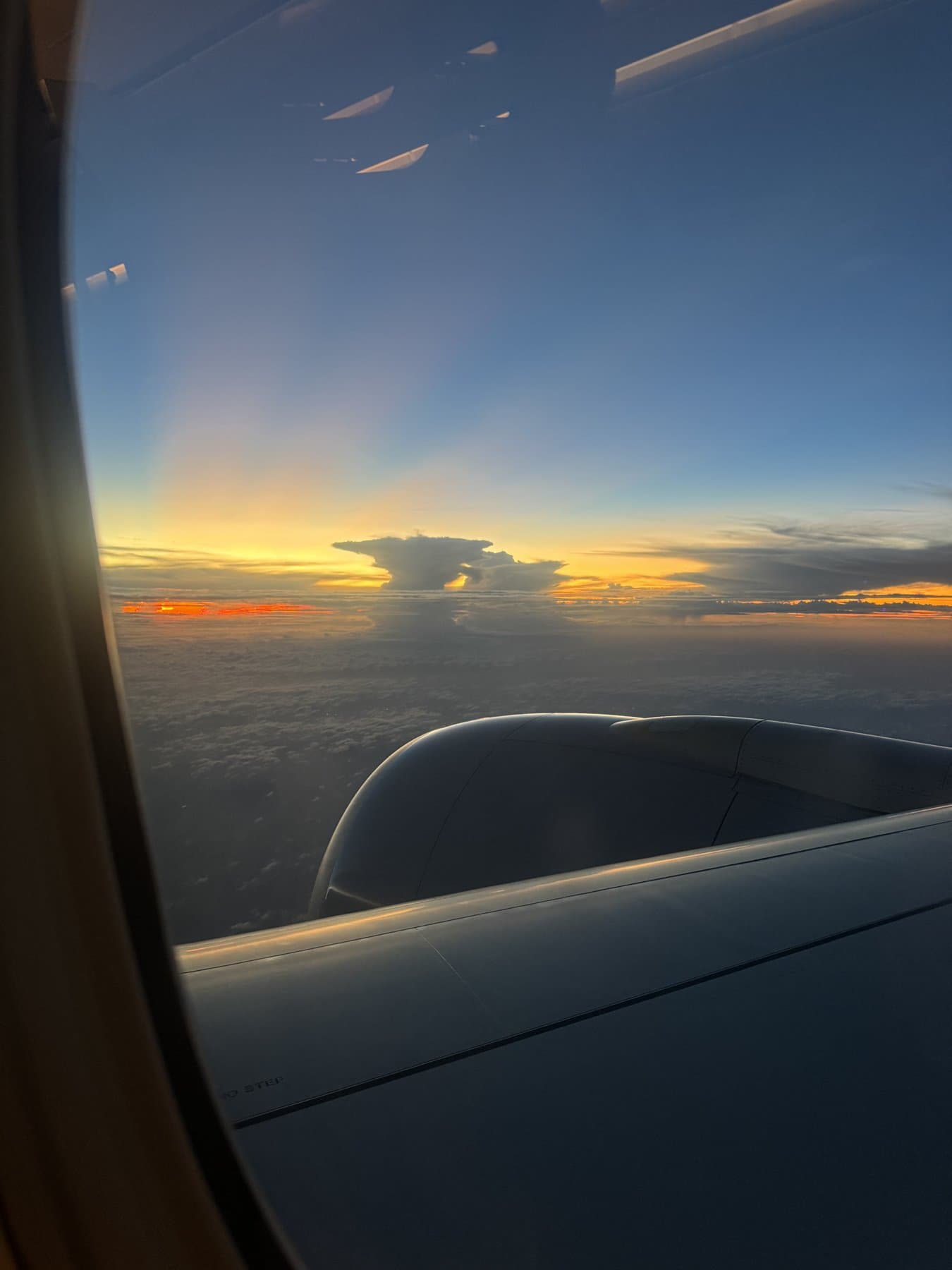
Now the part of me that was having the time of its life in the same seat. I am a huge transportation nerd, and despite the fear of flying, thirteen hours on a Boeing 777 is still cool to me. My wife got upgraded to business on the way over while I sat in Premium Plus, which was too, too funny. Then we landed, and for two weeks it was paradise.
I used to work at Tesla, and we'd all heard the lore: Chinese EVs were exceptional, BYD was the real competitor, and if the 100 percent tariff ever came down Chinese auto would destroy the US market. Our first DiDi from the airport was a Zeekr 009 with two captain's chairs in the back (massage, ventilation, recline) and a TV you could AirPlay to. The most nuts thing I had ever sat in. That was the cheap tier.
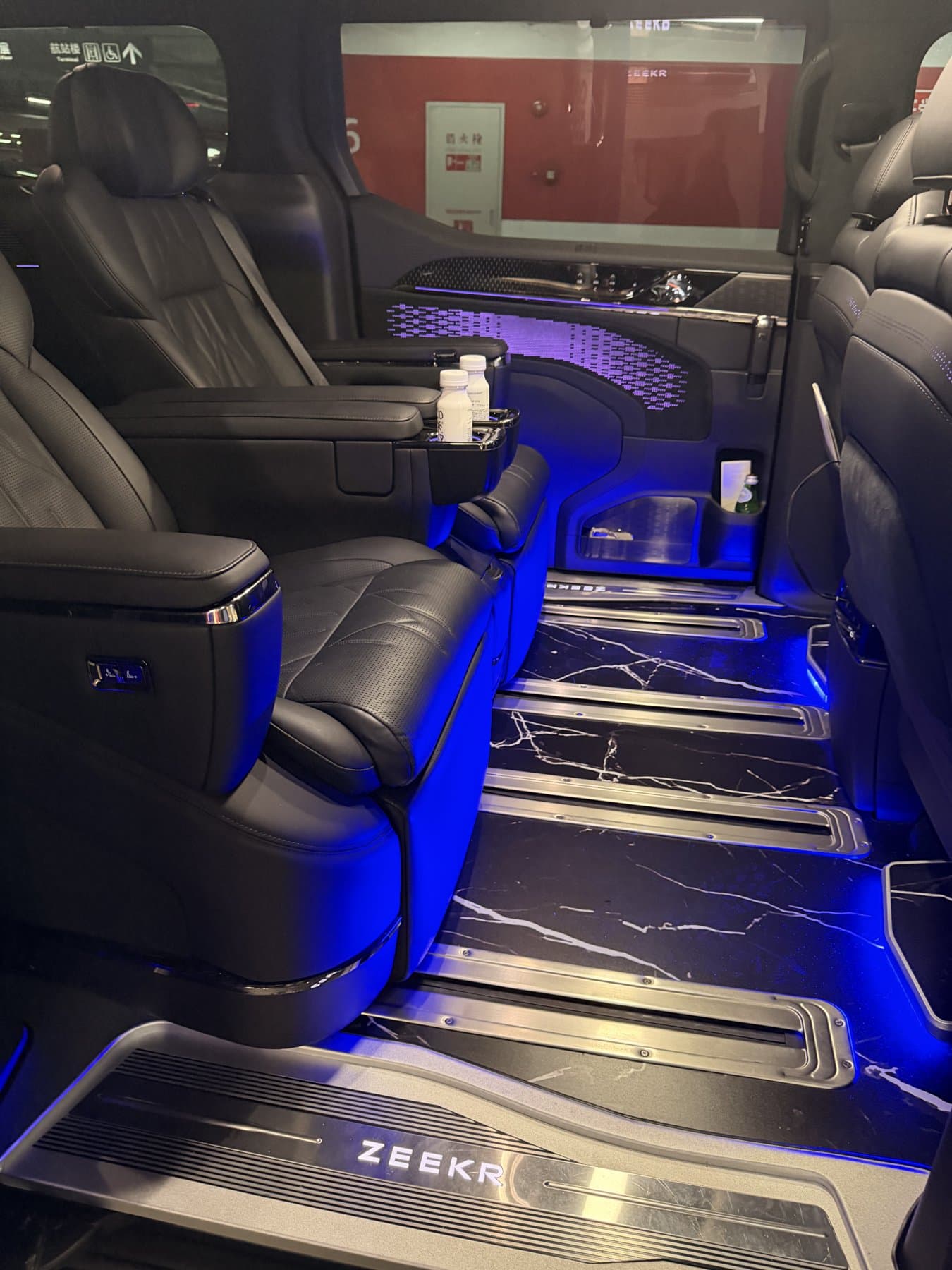
The luxury tier gets you a European badge and nothing else. The cheaper premium tier puts you in a sixty or eighty thousand dollar Chinese EV that matches a Bentley on materials and beats it on features, and even the economy tier, ten and fifteen thousand dollar cars, was fine. Everything in Shanghai is electric. The streets were quiet in a way I've never experienced in a city that size, and they didn't smell, apart from the occasional sewage. Honking is banned downtown, with fines, which would never fly in America and which I now miss. My prediction: if a Xiaomi SU7 ever cleared US safety regs, a forty thousand dollar car would sell here for eighty, because it is as good as a Model S or better. I saw one in a showroom in olive green and found it hard to leave. Why they're that good and that cheap (scale, a domestic battery supply chain, a decade of subsidies, dozens of makers at each other's throats, less red tape) is a longer argument than I'm qualified to make. I can tell you what I sat in.
And this is where the fear and the nerd collide. The thing that got me, sitting in traffic under the river, was that the tunnels are bored: not cut and cover, bored, with tunnel boring machines, for the metro and the expressways both, and there are a lot of them. I looked it up afterward because I wanted to know whether the machines were European. China bought two TBMs from Herrenknecht in 1997, launched its first domestic machine in 2008, and now builds roughly seventy percent of the world's tunnel borers. The last part they still had to import, the main bearing, went domestic in 2023. The thing I was afraid of was the exact thing I would have been most excited about, if my brain had let me think. Same tunnel, same seat.
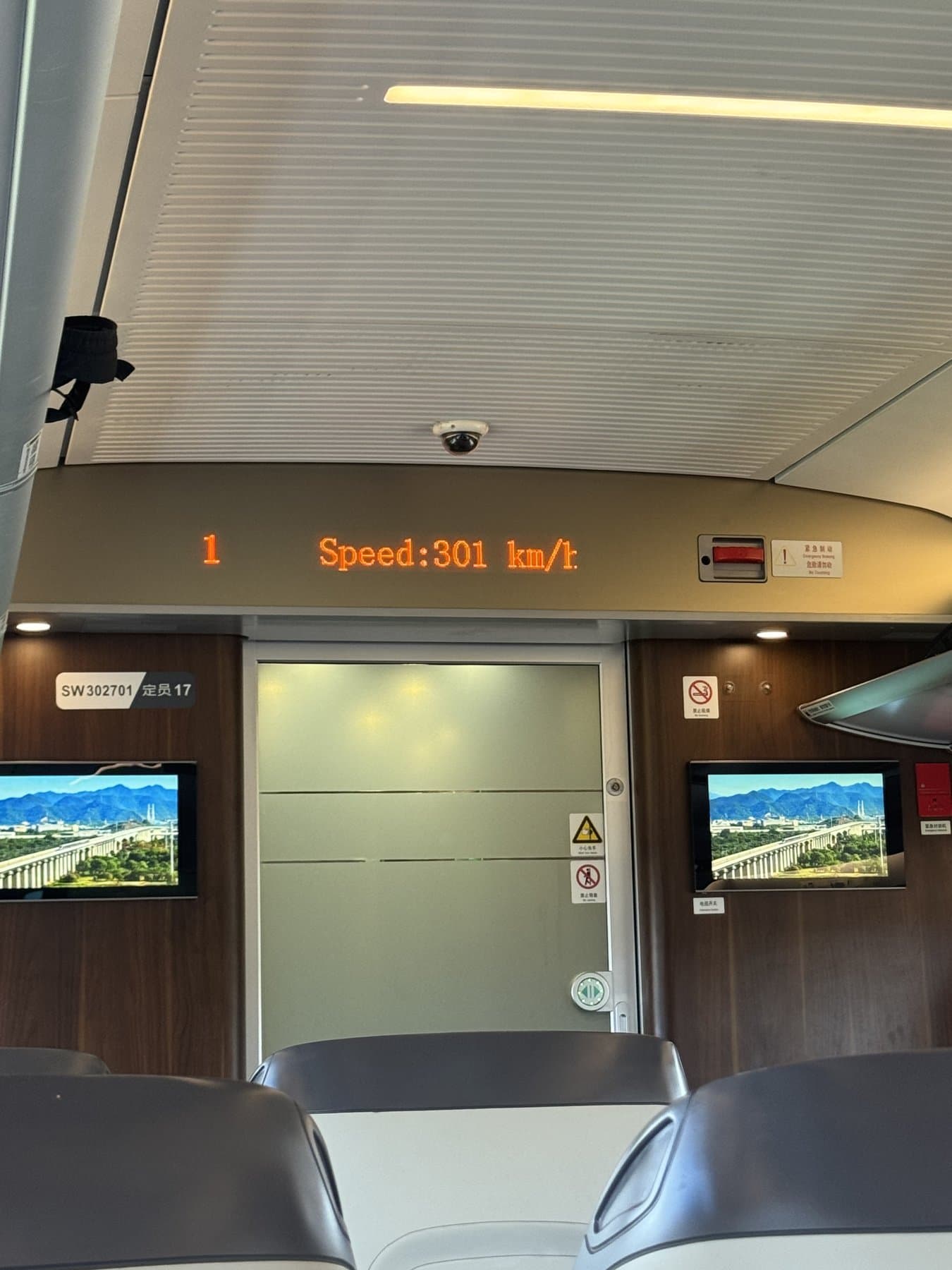
The high-speed train to Hangzhou read 301 km/h on the cabin display and felt like nothing. The airports are very big, very grand, easy to get around, and efficient in a way that is hard to photograph. I didn't get to fly the COMAC C919, the Chinese-built airliner, but my wife did, on a 36-hour side trip to Beijing while I was at the factory, and she photographed the safety card twice because she knows who she married. To anyone with my fears and a China trip on the calendar: China is a surprisingly easy place to travel. The visa on arrival was fine, the metro was easy, the high-speed rail was easy, getting out of the big cities was easy. The hard part was in my head, and it would have been there anywhere.
What surprised me most is a little embarrassing to admit: I'd been to Japan, and I'd assumed China would be more like it than it is. The metro is great and the old part of Shanghai is dense and built up, but it isn't orderly. Nobody queues, scooters use the sidewalk and seem to be aiming for you, left and right on the escalator don't exist, it's loud in public, and tour groups walk around with speakers. The metro cars were quiet, but that read as a rule rather than a custom. Leave the old areas, especially on the Pudong side where we stayed, and it starts to look like Texas: enormous roads, everything spread out, nothing walkable. People call it the Texas of Asia, and now I get it.
The bigger embarrassment is how little I knew going in. I didn't know the People's Republic was only founded in 1949, a year that turns out to matter to me for a different reason, which I'll get to. I didn't know mainland China writes in simplified characters, which I'd have known if I'd known any of the history. I assumed people would speak English, and almost nobody did. For Japan I'd absorbed the customs from years of anime and travel videos. I'd watched plenty of China travel videos too; they just don't talk about the customs, or the government, much at all.
## 3. Who built this
One interaction, over and over, is what turned the sightseeing into a question. Everyone was curious, and the question, asked more or less directly, was always: where did you grow up? The moment I said Canada they lost interest completely. I found that hilarious, because where I grew up is genuinely novel, and then I found it useful, because it told me what I was in that conversation: not American, not Chinese, and looking at both from the outside. Canada isn't a threat, and under Carney it isn't even a rival, so nobody needed anything from me. That is a good seat to think from.
Here's the coincidence I can't get over. Newfoundland joined Canada on March 31, 1949. The People's Republic of China was proclaimed on October 1, 1949. The country I was born in and the country I'd just landed in started the same year, six months apart, and both are inside living memory. Both sets of my grandparents remember Newfoundland before confederation, when it was its own dominion. A couple of my coworkers told me they had family, not that distant, who were on the Long March. Two peoples answering the same question in the same year, how much government do you want in your life, and answering it differently. So let me take the three countries I've now lived in or under, in order of how much they trust the state.
The United States, the way I understand it, was built on the idea that the government is the thing to be afraid of: three branches designed to fight each other, and a Bill of Rights that is literally a list of things the government may not do. It took me years of living here, a lot of Dan Carlin, and actually reading the founding documents to understand that at a first-principles level. Distrust is the operating system, and the dynamism in my title is what runs on it. I should be specific about what I mean by dynamism, because I am the evidence. I'm an immigrant with a Canadian passport who got to work on cars at Tesla and now works on hardware at Apple, and Apple put me on a plane to a factory in China to help make its products. The most valuable objects American dynamism produces are built by Chinese central planning. The two systems were not competing in that van. They were collaborating, and I was the handoff.
Canada made a different bet, and I hadn't fully noticed until I was in China. A majority government controls the legislature and the executive at the same time, the Senate is appointed and rarely blocks anything, and there is a clause in the constitution, the notwithstanding clause, that lets a legislature override Charter rights outright. People are fine with it because it delivers: healthcare, EI, equalization. In Newfoundland, EI is built around the fishing seasons and it decides elections; people love their handouts and vote accordingly. The government is one of the biggest employers in the province, it is in your life every day, and most people like it there.
That bet had a price, and I know who paid it. Between 1954 and 1975, Newfoundland resettled around three hundred communities, thirty thousand people, for the good of the many. My nan, my dad's mother, was from Merasheen Island in Placentia Bay. She left before the end, but the last family left Merasheen on October 10, 1968. These days the province pays a household hundreds of thousands of dollars to leave (it was a fraction of that in my nan's day), and everyone I'm related to will tell you it doesn't make up for leaving the place your family toiled over for generations. Where once they stood, we stand, as the Ode goes. They took the money, and they still sing that. So when I say the Chinese approach is Star Trek, the needs of the many outweigh the needs of the few, and if your family's house is in the path of the high-speed line you are out of luck, I don't say it from a great height. My own province did it to my own family, and my family is still not sure it was worth it.
China made the biggest bet of the three: one party, no separation of powers, by design, and a state present in every part of daily life. What I can see from the back seat is that the bet has paid out in a way no other country's has: the metro, the trains, the cars, the tunnels, the hundreds of millions of people lifted out of poverty in my parents' lifetime. What I can't see is the price, or who paid it, or whether they think it was worth it. People seem to tolerate the state, and I can only guess why: the results, or the surveillance in whatever form it really takes, or both. I don't know, and I want to be precise about why I don't know. It isn't modesty. It's that the answer lives with the family in the path of the high-speed line, and I can't ask them.
Here's where the ladder leaves me, and it's not where I expected. The United States is the outlier, not China. Most countries, including the one I grew up in, concentrate power and their people tolerate it because it delivers. The difference between Canada and China is what happens when you stop tolerating it: in Canada you vote the party out and it leaves; in China you can't. That is the whole gap, and it is not small. But everything else, the size of the state, its presence in your day, the public's willingness to let it build, was more familiar to me than it would be to an American, and it's why the Chinese and I could stop being curious about each other so quickly. We'd already agreed on more than either of us knew.
Which is also why I'm not going to tell you what the Chinese people are like. I lived in the United States for years before I understood Americans, and it took history, podcasts, and the founding documents to get there. I've had sixteen days in an ancient country whose language I don't speak, inside a bubble I named at the top. I know what it would take to actually know: the history, some of the language, more trips, and real conversations with people who aren't being paid to be nice to me. Anything I told you today about the Chinese character would be a guess from a guy in a Zeekr, and probably a wrong one.
## Getting back in
The flight home was almost the worst part. I hadn't thought about it once the entire trip, so I wasn't ready for it, and I spent the first two hours freaking out until one milligram of lorazepam knocked me out for a solid four and a half. I enjoyed the rest of the flight, drugged up. The food was ass.
And I'm looking forward to October. Shanghai was fun and felt like a vacation: nerd out at the factory all day, nerd out reading about infrastructure in the shuttle, long team dinners at fancy restaurants at night. I'm a little nervous about the flight, but I've done it now, so there's no reason I can't do it again. That sentence is the whole first act.
The question I brought home is smaller than the one I left with. I left wondering who wins, America or China, whether America is in the last gasps of a great empire or just getting started, whether liberty and the individual can stand up to people who love their government and believe in the greatness of their nation. I came home thinking the big question is decided by a small one: do the people paying for the big projects believe in them? In Newfoundland I know the answer, because I can ask my family, and the answer is that they took the money and still sing the Ode. In China the answer belongs to a family outside Hangzhou whose house was in the way, and sixteen days in a Zeekr doesn't earn the right to guess what they sing. It would be great to know. That, more than the factory, is why I'm getting back in the van.
A tunnel has two openings. I came out of the one I could see. The other one is the part of China I haven't been to yet.